


Adrian Bejan’s (2026) Diversity through Freedom is a profound and timely masterpiece that redefines our understanding of diversity in the modern world. A distinguished professor of thermodynamics at Duke University, Bejan persuasively argues that diversity is not a political slogan or artificial construct mandated by committees but rather a universal, inevitable phenomenon grounded in the laws of physics. Utilizing Constructal Law, which governs how flow systems evolve to provide greater access, the book demonstrates how diversity emerges naturally whenever entities, whether rivers, animals, or human societies, are granted the freedom to change and morph. By stripping away contemporary jargon, Bejan provides a refreshing, science-based perspective that validates true diversity to be the infinite, immeasurable quality of variety found in nature.
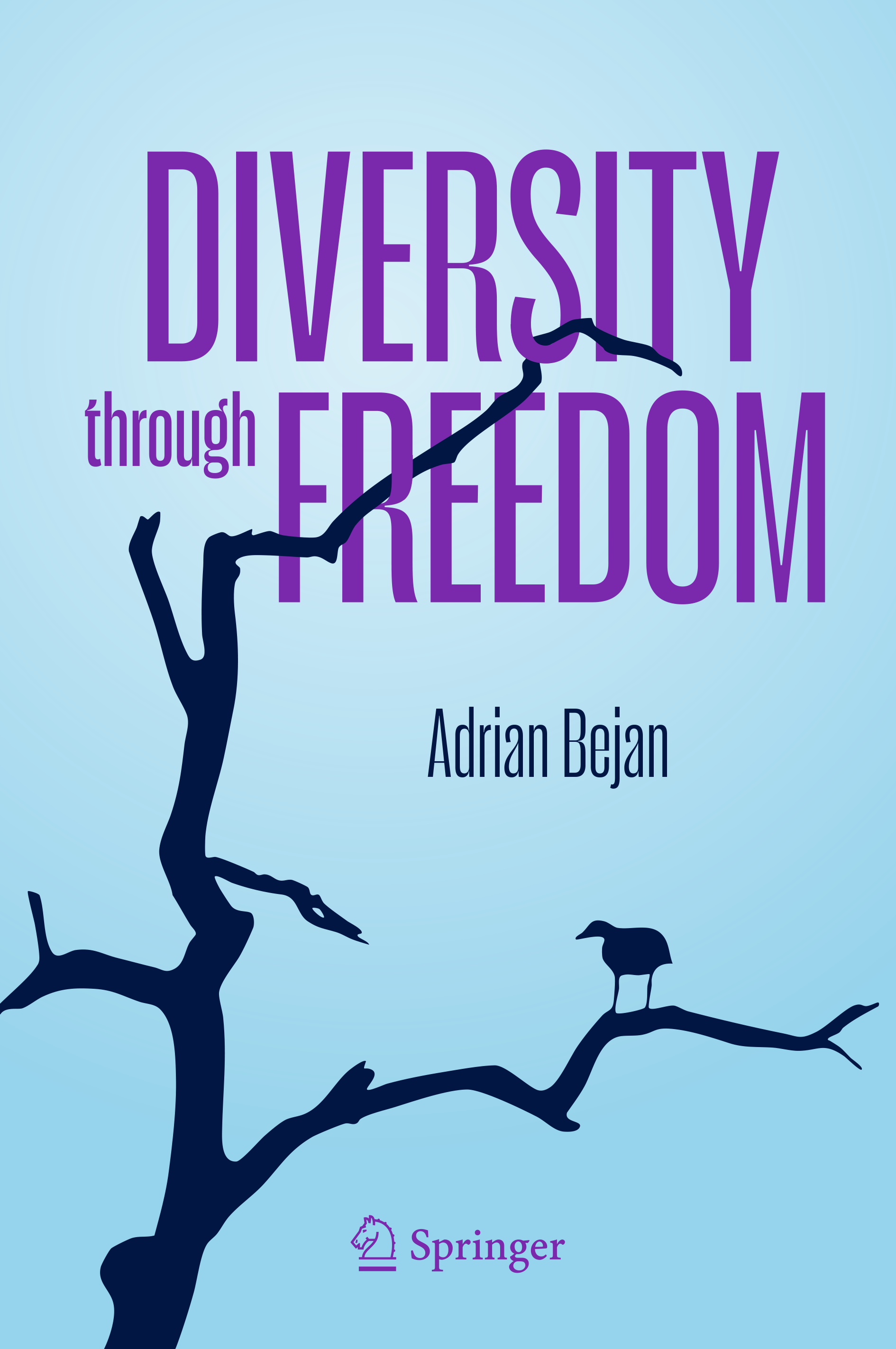
At the heart of the book’s scientific framework is the counterintuitive revelation that “perfection is the enemy of evolution” (p. 23). Bejan explains how nature does not strive for a singular, frozen state of flawless design but instead keeps what works, allowing life and movement to flourish in a “broadband of slightly imperfect designs” (p. 3). Through clear, mathematics-free illustrations of convex performance curves, Bejan shows that a vast multitude of diverse shapes and rhythms can achieve nearly the same performance as a theoretically perfect design. This fundamental principle dictates how an immense diversity of solutions emerges from the freedom to be slightly imperfect, ensuring resilience and progress in everything from the layout of airport concourses to the architecture of city streets.
Bejan masterfully applies this physics lens to human and animal movement, illustrating how elite performance naturally gives rise to diverse physical forms. He explores the divergent evolution of athletic body types, demonstrating through physics why the fastest sprinters tend to have a higher center of mass, while the fastest swimmers have a lower one. These insights not only unify the study of animal locomotion and human sports but also highlight that natural hierarchies of merit are born from freedom and competition. Furthermore, Bejan challenges the narrow focus on convergent evolution by showing how divergent evolution operates simultaneously, as in the distinct cross-sectional shapes of fish compared to those of aquatic mammals, thereby proving that nature actively generates endless variety to optimize flow and heat retention.

The book moves seamlessly from the natural world to human institutions, offering a rigorous defense of the merit system and the solitary thinker. Examining the world university system, Bejan reveals that institutional prestige and rankings are not the result of artificially imposed diversity or sheer size, but rather the natural byproduct of groundbreaking ideas generated by brilliant individuals. He vigorously dismantles the contemporary push for the “collectivization of research” (p. 136), warning that monumental ideas originate in the mind of the solitary investigator, not within the confines of groupthink tanks or bureaucratic task forces. By defending the “majority of one” (p. 15), Bejan inspires readers to value the creator who, like a beautiful flower, attracts a diverse crowd of followers.
Perhaps the most gripping and deeply personal aspect of Diversity Through Freedom is Bejan’s critique of what he terms “unnatural diversity.” (p. 137) Drawing on his harrowing childhood experiences under communism in Romania, he draws striking parallels between modern diversity, equity, and inclusion (DEI) policies and the oppressive class-struggle tactics of the Soviet-era Red Terror. Bejan uses the poignant metaphor of a man walking a dog on a leash to illustrate the built-in inefficiency and suffering caused by collectivism: When forced to move at a dictated, uniform speed, both the man and dog are deprived of their natural, most economical rhythms. He argues that policies aimed at artificially engineering equality of outcome restrict human potential and are inherently destined to fade away because they run counter to the natural laws of evolution.
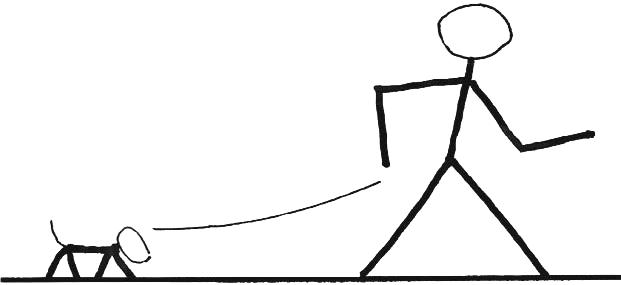
Diversity through Freedom is an empowering, holistic manifesto for liberty, common sense, and the unconquerable human spirit. Bejan successfully connects disparate phenomena, from the meandering of rivers and the rhythm of breathing to the cyclical nature of economic growth and the hierarchy of universities, under one elegant unifying principle. He challenges readers to reject ideological jargon, to ask difficult questions, and to recognize that society is at its healthiest when individuals are free to associate, compete, and evolve on their own terms. For anyone seeking a scientifically grounded and profoundly liberating understanding of how the world truly works, Bejan’s ultimate advice resonates clearly: “If you want diversity, give the population freedom, not the leash.” (p. 155).
I enjoy putting together Umit Gunes on the Constructal Law, and I’m glad to share it with you for free. I hope you find it engaging and worthwhile. Preparing each post takes considerable time and effort, so if you appreciate Umit Gunes on the Constructal Law‘s content and can support it, please consider choosing one of the paid subscription options.
Diversity is written in the language of the universe as: semantics, syntax, grammar, expressions. The grammar of the language of the universe is taking care of the universal diversity of the universe. Diversity is universal formalized by the Constructal meta law
There is nothing more diverse than the unique individual we all are. Group labels detract from that uniqueness.